
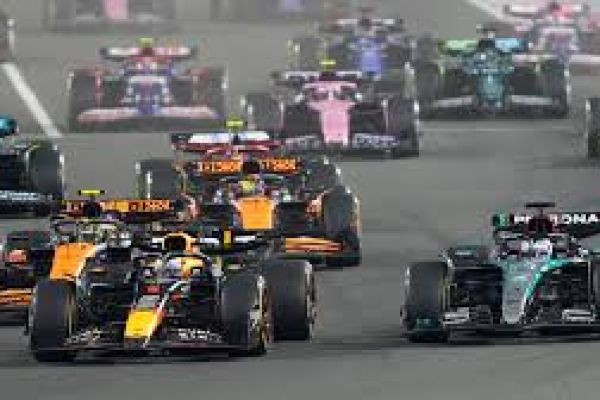
The Qatar Grand Prix, held at the Lusail International Circuit outside of Doha, is a dramatic spectacle under the floodlights. Having been added to the calendar in recent years, it quickly gained a reputation for extreme physical demands on the drivers and high mechanical stress on the cars, particularly the tires.
I. Circuit Profile: Lusail International Circuit
The Lusail circuit is a high-speed, flowing track that tests both aerodynamic efficiency and tire management.
Key Statistics:
Length: 5.380 km (3.343 miles)
Corners: 16 (10 right, 6 left)
Race Distance: 57 Laps
Unique Feature: Permanent floodlights allow the race to be run in the cooler evening, though temperatures remain challenging.
Circuit Layout:
The circuit is characterized by its exceptionally long main straight, which is over 1 km long and leads into the key overtaking spot at Turn 1. Following this is a sequence of 12 high-speed and medium-speed corners from Turn 4 to Turn 15, which are often compared to the challenging high-G sections of circuits like Suzuka or Silverstone. This flow state demands continuous commitment from the drivers and puts intense lateral loads on the tires.
II. Core Challenges of the Qatar GP
The unique environment and track design pose three main challenges for teams and drivers:
1. Extreme Tire Degradation
This is arguably the single most important factor at Lusail. The combination of high-energy corners and the abrasive asphalt means the tires are subjected to immense lateral forces.
High-Speed Load: The sequence of corners (Turn 4 to Turn 15) forces the cars to maintain high speed while aggressively steering, chewing up the rubber.
Required Strategy: Teams often resort to a mandatory two or even three-stop strategy to manage the intense wear, turning the race into a high-stakes tactical battle.
2. Physical Toll on Drivers
Despite the race being held at night, the ambient temperatures and humidity remain high. However, the physical challenge is primarily due to the sustained high-G forces through the continuous sequence of fast corners. Drivers report it as one of the most physically exhausting races, demanding extreme neck strength and endurance.
3. Sand and Dust
Being located in the desert, sand can blow onto the track surface, especially early in the weekend or when cars run wide. This reduces grip off the racing line, punishes even slight driver errors, and contributes to the track's abrasive nature.
III. Race Dynamics and Overtaking
Overtaking is challenging but not impossible, primarily due to the massive straight.
DRS Zone: The single, long DRS zone on the main straight is the most potent overtaking opportunity. Drivers rely heavily on slipstreaming here to complete the pass into Turn 1.
Turn 6/7/8 Complex: While not a primary overtaking spot, drivers can attempt aggressive moves here if they carry better exit speed from the previous corners, though this is high-risk.
Qualifying Importance: As with many high-downforce tracks, track position is crucial. Qualifying well significantly improves the chances of success, as it allows the car to run in clear air and manage the tires more effectively.
IV. Summary of Performance
The Qatar GP rewards cars with excellent high-speed aerodynamic stability and teams with a strong understanding of tire management. Historically, teams that perform well on circuits requiring good turn-in stability and high-speed efficiency (like Red Bull, Mercedes, and Ferrari) tend to excel here, provided they can master the aggressive rubber wear.